Highway 17
Revisited

Highway 17
Revisited

Barbara Epstein
View all stories

Recently, Arif Khan ’16 checked in with an update about a project he was opposing: a controversial Highway 17 expansion in the Hudson Valley, where he lives with his wife, architect Sabeen Hasan, MArch ‘09. When we first spoke several years ago, he was mounting a spirited, if less than certain, resistance. The following is an edited version of our conversation.

Barbara Epstein
The last time we talked about your advocacy work was spring 2021, when you had started your David and Goliath project: an Anti-“Highway 17 widening ” campaign that was facing off against 15 years of political muscle, studies, money, and “Pro” coalitions. You had been assembling an “Anti” coalition and getting some traction. Give us an update.

Arif Khan
Well, as of November, NY Governor Kathy Hochul announced she was putting the project on pause. According to more politically savvy colleagues, it’s a nice way of canceling it without upsetting the lobbyists who were pushing the project. Earlier she had allocated $1 billion for the project, so I think this is a great victory for us.

Map of the area designated to be widened

It started out as a $500 million project and grew to between $1.3 and 1.4 billion that wouldn’t provide benefit, other than to national construction companies, asphalt companies, and engineers. If we have funding for infrastructure, I would much prefer that it support local communities through transit, bicycling, walking, helping small businesses and downtowns, rather than expanding highways and getting folks to drive faster further.

Folks said, “There’s never been traffic on that road—why are they widening it?”

In 2021, I approached the nonprofit Catskill Mountainkeeper, which hired me to do a study and create a plan. Since then, we built a coalition of some 20 different organizations that went on record in opposition. We wrote letters to the governor and elected officials, and met with the Department of Transportation to express our concerns about the project and about their studies, which seemed flawed. We put out press releases and the alternative vision for that money that I authored. I included full funding for intercity transit, a complete trails program, sidewalks and Safe Routes to School, pavement repair…but I could only come up with $400 million of projects.

BE
What do you think moved the needle?

AK
I’d like to think it was our activism, but there was probably a confluence of things that came together, notably a possible shortage of federal funds coming to the State. When we started, we were told by elected officials—even one who considers herself a climate champion—that ours was the first opposition they’d heard. They just thought it was a done deal.

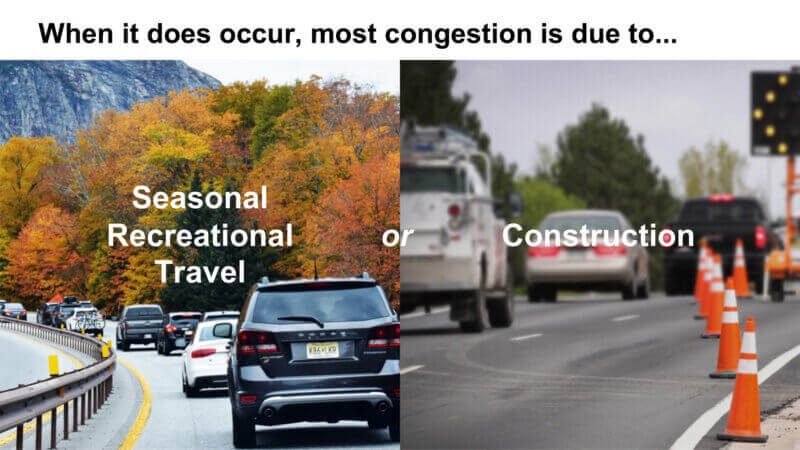
2 images of traffic on Highway 17 caused by seasonal recreational travel and construction

New York is known to have poor quality roads and a backlog of maintenance. A project that added more roadway would put the state further behind. The repairs, paving, and bridge repairs in our alternative vision already have been stalled on the to-do list of infrastructure improvements. Maybe we created just enough friction for folks to take a hard look at it and ask—given constrained budgets and the political climate—do we really need it?

BE
Your strategy had been to engage the environmental advocates. How successful was that?

AK
Interestingly, they all had had reasons for holding back on this. For the most part they agreed it’s not a good project, but Senator Schumer wanted it, and if they opposed him, it could cost them grant funding and good relationships with the government. Nonprofits, like political entities, have to weigh what their donors think, whether those are institutions, foundations, government, or individuals, so that was an interesting takeaway. One group said, “We’re not going to put our resources in a losing battle.”

The cool thing was, they came on board. There’s safety in numbers, right? I got lucky in finding Catskill Mountainkeeper, which was willing to take the risk, had the capacity, and didn’t care about political ramifications because they have independent funding. As for elected officials, the few that had voiced support for widening never came around. The ones that hadn’t made public statements about it came on board.

BE
A big part of this is education. How would you rate your success in raising awareness about transportation and land use being integrally tied to climate issues and environmental issues?

AK
We held one town hall in Middletown, New York— poetic, right?—in a development called the Rail Trail Commons, and people could walk and bike with their families to get there in an otherwise very auto dependent area. It attracted activists and organizations that were aligned, plus a couple of elected officials. Members of our coalition hosted online events, where we gave presentations and people could ask questions and then sign letters to elected officials.

People who work in the environmental and climate change movement internationally have told me it’s hard to convey the connection to transportation and land use; it’s very abstract. Yet, from the studies I’ve seen, 30 percent of greenhouse gases in the Hudson Valley are a result of transportation.

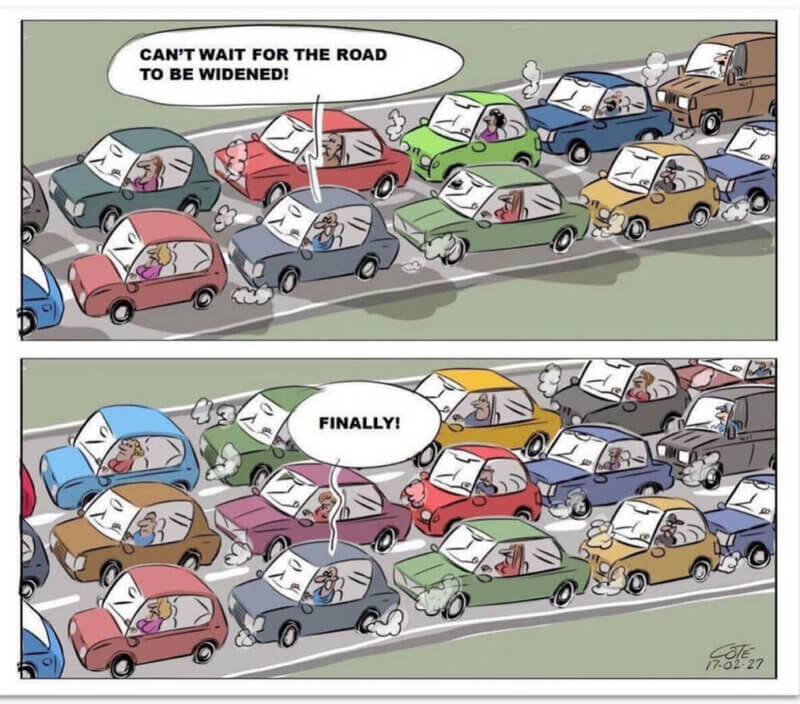
Cartoon by Coté showing the same road with 2 lanes and 3 lanes; in both cases the cars are bumper to bumper

The expansion project had support because everyone hates sitting in traffic, so if a politician says, I will solve that by making this highway wider, that’s tough to fight. It’s hard for most folks to grasp induced demand; that is, if you widen the highway, you’ll have more cars on the road at one time, and it will cause congestion on the smaller roads. We tried to explain in a succinct way, and maybe it worked.

Adding a lane can actually INCREASE traffic.

BE
Early on you were given the advice to focus on stopping the expansion but not to tie it in with a new vision, which could alienate or divide some would-be supporters. Why did you think it was important to put forward an alternative vision?

AK
That advice was based on the experience of a veteran activist who had coalitions fall apart because of disagreements over what to do with potential “spoils.” In this situation, everyone in the coalition agreed we need more funding for bike, ped, transit. I think the vision has been helpful in giving people glimpses of the opportunity costs of spending billions on a highway. And a vision for another reality.
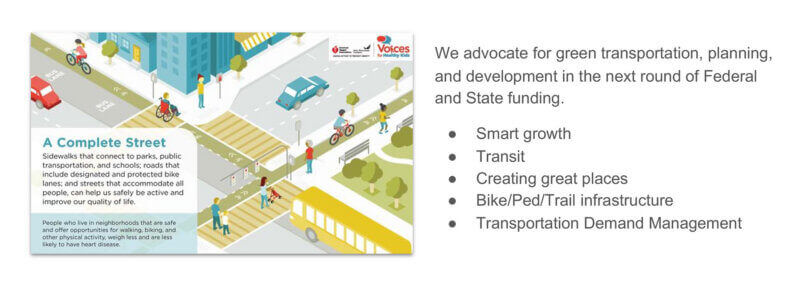
Complete streets graphic showing a livable walkable city

BE
What did you learn from this effort?

AK
Maybe that anything is possible—I keep needing to remind myself.

I didn’t set out to be a transportation activist, but in this case, there was no one stopping a bad thing. It was Covid and we had closed the restaurant, so I had time on my hands and nothing to lose. Sometimes going with your gut means going against the experts.

Another learning: join forces with an organization that has the gravity to pull other organizations along. Maybe that’s just obvious: it’s essential to anchor your movement with others.

BE
When we last talked about Highway 17, you said, “I can spend a year on this.” By my count, we’re at four years.

AK
I haven’t been working on it full time—it’s been a side gig. Catskill Mountainkeeper paid me for the vision study, and then they hired an environmental justice person full time, who has been amazing at stewarding and coordinating, and keeping everything moving.

I thought it would be a quicker timeline. One other learning, and maybe it’s not a surprise, was that the DOT consultant in the initial environmental impact study said that the widening will help the environment by reducing congestion. I called them out on it, and yet they stood by it. To me, it’s professional misconduct for a planner, an environmental scientist, to suggest there would be no negative impacts of highway widening. But a firm that does major highway infrastructure projects like this doesn’t want to upset their client, so they framed the report to support it.

Our meeting with the consultants and DOT was not open to the public, and none of them came to our town hall. They had “public forums” with no time for public input. I said to one traffic engineer, “Off the record, it seems like this project is not needed,” and he nodded like he agreed with me, but he’s paid to be there for a project.

My disappointment is that we have policies in place, like the requirement for environmental review, but it’s not a true review. For $5 million, it’s delays and time and hundreds of pages primarily designed to check a box. There was a public comment period, and we organized a lot of public feedback that was put into an appendix and had no impact on the findings.
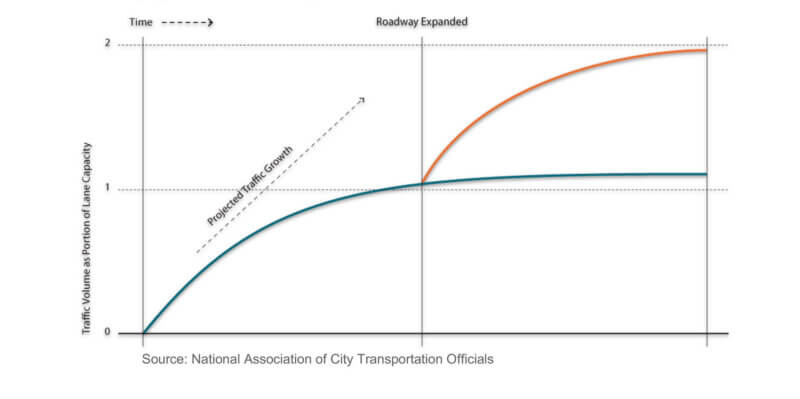
Line graph showing great increase in congestion after widening of road

Maybe that policy and process served us by creating a period where we could mount resistance. I don’t know whether the governor was influenced by our letters and sound arguments, or something else outside of our control: fewer federal dollars, budget shortfall. The press wrote, “delayed after pushback from transportation planners and environmentalists who argue that it isn’t necessary.” We know that once it’s written, it becomes truth.

BE
You like to bring opposing viewpoints into conversation with each other. To what extent did you feel that you were able to do that here?

AK
I was excited to reach out to fiscal conservatives, thinking I could get both environmentalists and fiscal conservatives—who are typically on opposite sides—to be on the same page, and I couldn’t. It’s amazing: the fiscal conservatives love highway widening. There was one legislator, hardcore right wing, who was opposed to the project, but he never responded to multiple calls and emails.

BE
What else is on your plate? You said you were unemployed so you have a lot of time, but I doubt it.

AK
No, I have projects.

I’m working on a Brownfields project in Orange County. Sabeen and I are working on an expansion for our local firehouse with a grant from the state, and we just completed a feasibility study for a youth center. I’m helping a friend with logistics and systems for her European culinary tours.

Last year Sabeen and I developed a product called Chikka Chikka, an Indian-inspired digestive made from fennel seeds, like you see in Indian restaurants. We have three varieties in colorful tins, we’re in over 170 stores and online, and we were promoted by New York Times Wirecutter in their gift guides. As for the Hoot Owl restaurant, it was never our intention to run it forever, and we sold in 2023 and used some of the proceeds to start our new business.
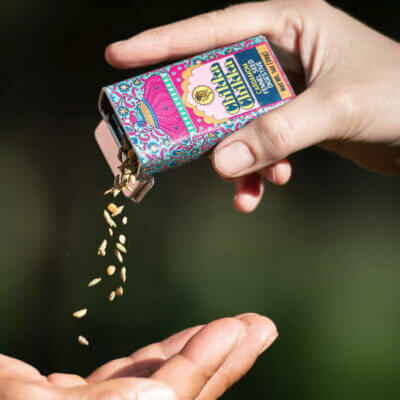
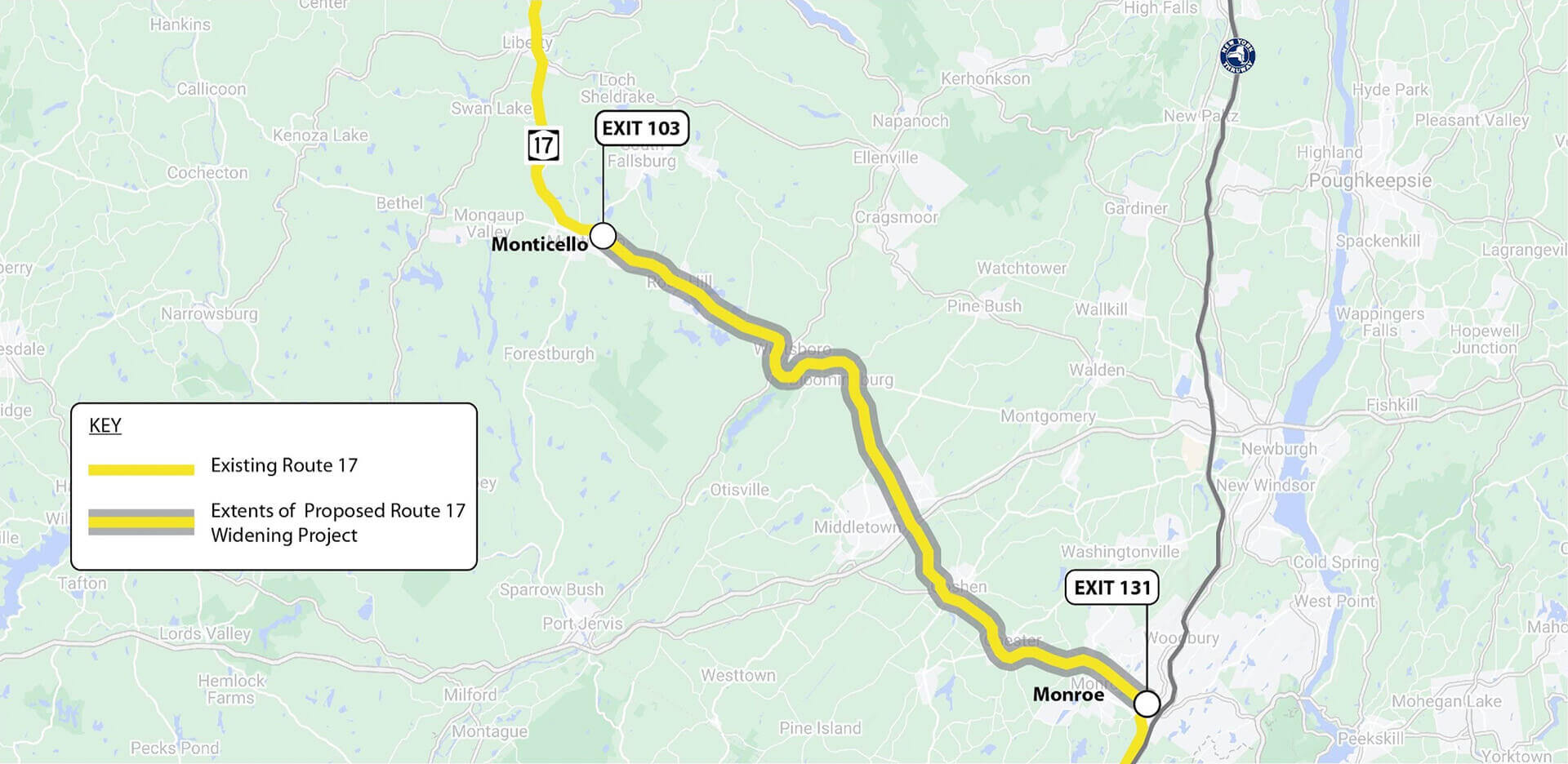
Photo showing one hand pouring Chikka Chikka into another hand