Rooted Futures:
Exploring Rurality, Design, Land,
and Kinship

Rooted Futures:
Exploring Rurality,
Design,
Land,
and Kinship

Natalia Rudiak and Grace Gallagher
View all stories

The rural landscape remains understudied within the broader fields of planning, architecture, or landscape, especially through interdisciplinary frameworks. To address this deficiency, in April 2026 the Harvard Divinity School Garden Group and the Graduate School of Design Rural Group presented “Rurality: Design, Land, Kinship,” a weekend of events exploring the intersections of rural life, design, sustainability, and spirituality.

The convening featured a gallery exhibition, excursions into and beyond the Harvard campus, and a panel series. Over 50 practitioners, students, faculty, and members of the public came together to bridge gaps in our collective understanding of rural planning, meaning making, and belonging to the land. The symposium—the first of its kind between the two schools—was generously supported by the Harvard Salata Institute for Climate and Sustainability, the Loeb Fellowship at Harvard GSD, Rural GSD, and Harvard Divinity School.
The Convening

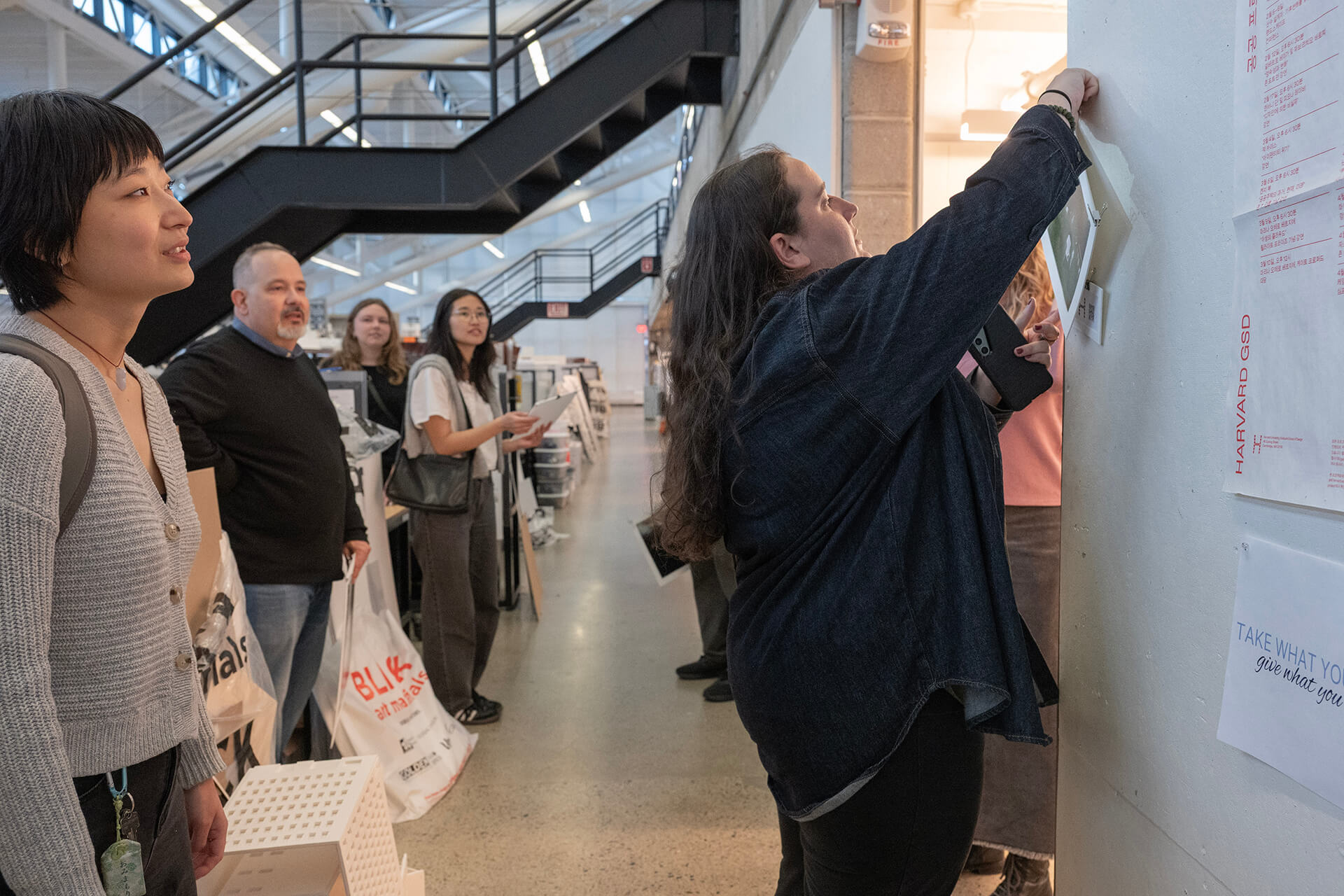
Friday evening showcased an exceptional exhibition, curated by GSD students Marco Fiorino, DDes, Landscape, Urbanism and Ecology, and Flora Klein, MLA ’26. Guests joined a ritualistic procession throughout Gund Hall to collect thought-provoking photographs of rural life and continued to the Harvard Divinity School Garden, where Marco and Flora framed the exhibition.


Landscapes of Ritual Practices brings into dialogue themes at the intersection of the design of spatial practices and the spiritual practice of ritualized action.

This exercise was done as pairings of images; these images selected works guiding viewers through cultivated and productive landscapes, inviting reflection on how ritual shapes and is shaped by the landscape of rural life today.

Rurality here is an ongoingness, an ongoing organization of space. Moving along a circular path around the garden, the exhibition discloses encounters with different photographs depicting ritual. Visitors encounter ritual through the raising of a tree, the fashioning of a scarecrow, and the slow encroachment of a vine: modes of inhabiting the world that mark time, cross thresholds, tend to what is fragile, and return to what persists. The pairings unfold as a journey from the ceremonial to the intimate, from the collective to the solitary, from the conspicuous to the hidden, tracing how ritual organizes rural life and quietly dissolves it.

In this convening, we ask where and in what form a landscape resides: in the rural, in the body, in the act of returning again and again to the same ground.

—Marco Fiorino and Flora Klein


Saturday’s three panels focused on: 1) indigenous perspectives on rural life, 2) the religious fortitude shaping reclamation of environmentally degraded rural spaces, and 3) the preservation, conservation, and revitalization present within design practices in rural landscapes today.

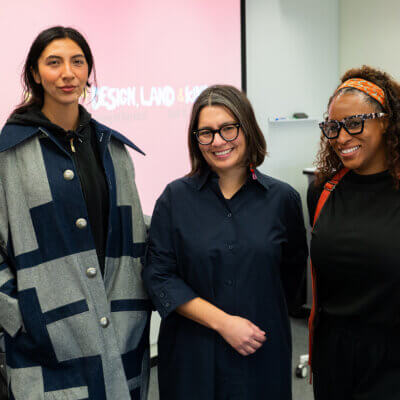
Allyship and Design: Planning with Indigenous Communities featured Midnight Lujan of the University of Toronto Centre for Indigenous Studies and Department of Geography and Planning, and Heather Dorries of the Institute of American Indian Arts, with Cecelia Cuff ’26 moderating.

Midnight Lujan, Heather Dorries, and Ceclia CuffWith emphasis on historical critiques, anticolonial frameworks, and blurred boundaries between rural and urban, the scholars highlighted the importance of local relationship-building with Indigenous communities and more-than-human relatives, reimagining place as a relationship to encounter rather than a resource to manage. This knowledge from Indigenous communities reminds Western systems to repeatedly reevaluate success according to when all life thrives.
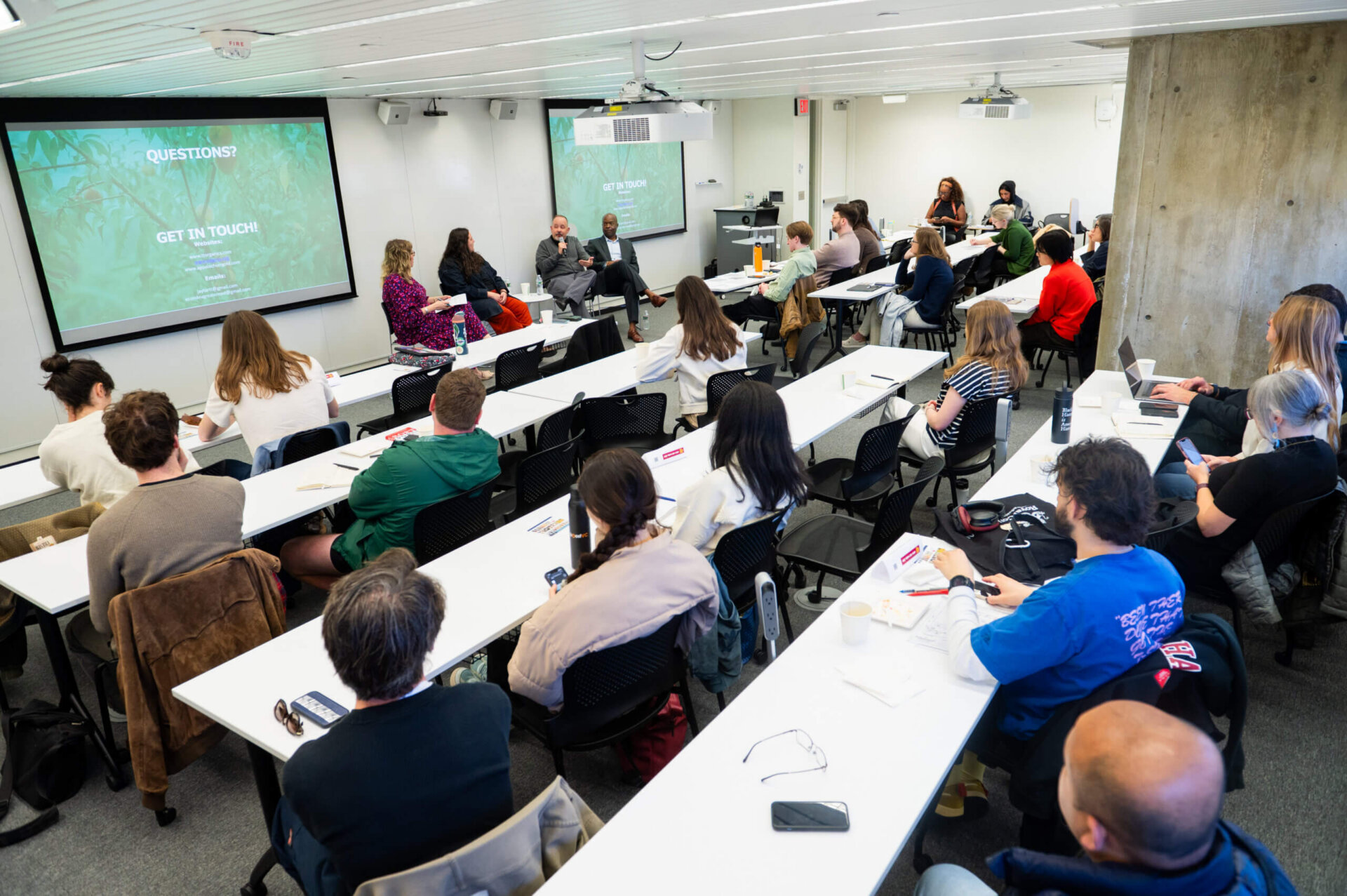
Panel 2 showing speakers and classroom

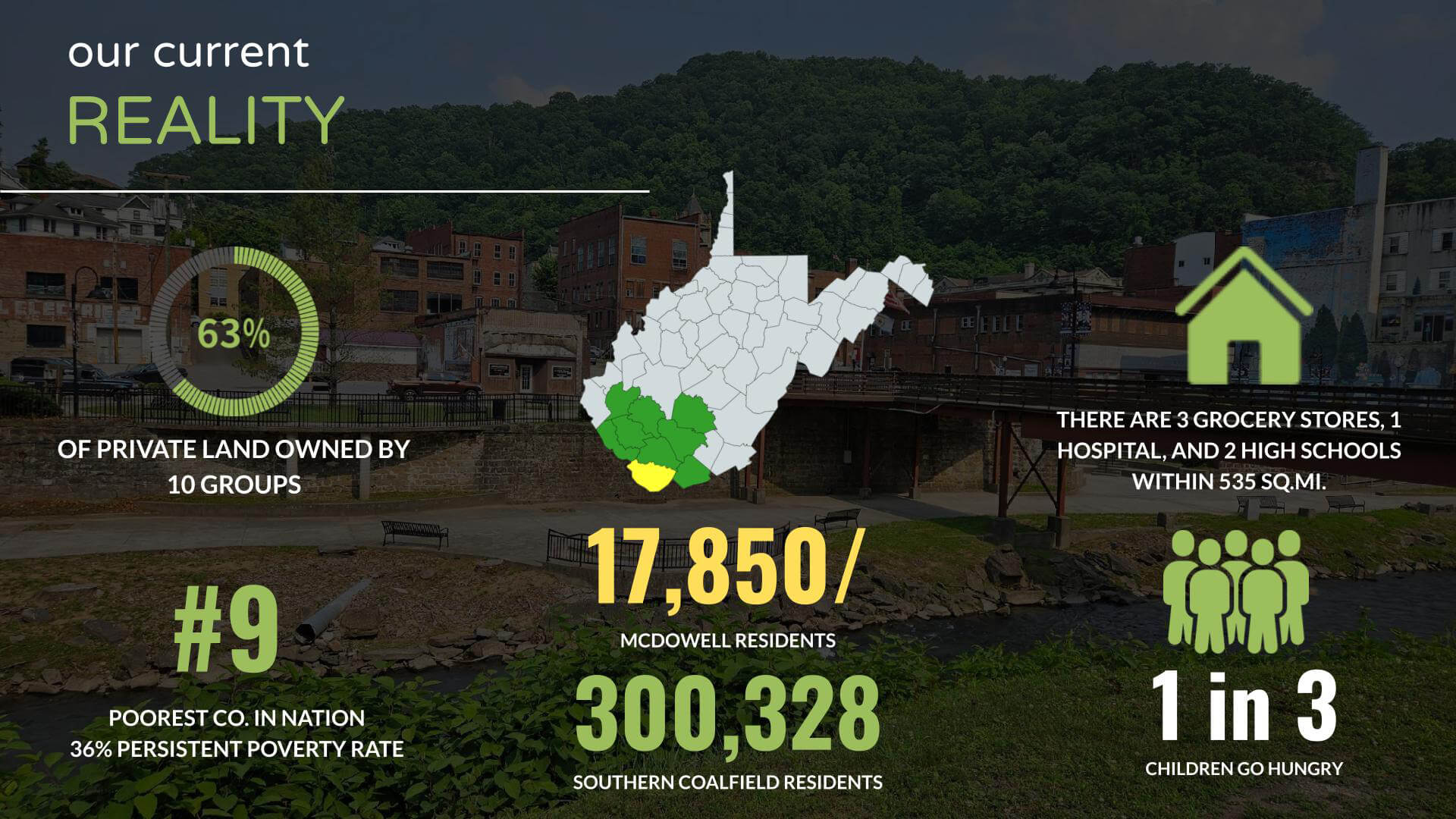
The second panel, At the Intersection of Innovation & Liberation: Co-Designing for a Sustainable Appalachia, moderated by Natalia Rudiak ’26, followed the threads of relation with three panelists from McDowell County, WV, who rely on Christianity as a spiritual source that brings liberation. Reverend Brad Davis and Reverend Caitlin Ware of From Below: Rising Together for Coalfield Justice, along with Jason Tartt of EDGE—Economic Development Greater East, discussed the corporatization and contested ownership of natural resources that contribute to scarcity of clean water, air, and food.

Slide from presentation showing the current reality of disparities and scant resources available to residents of McDowell County, WV

Reverends Davis and Ware described their approaches to change in McDowell County as co-laboring with God in the birth of a new world. Tartt spoke of the Global Black Soil Alliance, connecting Appalachia, Africa, and the Caribbean through agriculture, with a through line of Sankofa spiritual significance. Speaking of Jubilee and water purification, this panel got to the heart of a Christian ecotheological approach alongside design and planning practices across rural spaces. Through their picture of place-based community organizing and sustainable farming, they brought volume and hope to revitalizing the Earth.

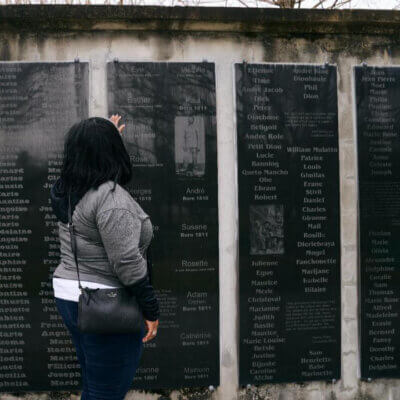
Viewer at memorial showing names of enslaved personsPreserve, Conserve, and Revitalize: Rural Design Practice Today, the final panel, featured Ashley Rogers, executive director at the Whitney Plantation; Cornelius Blanding executive director of the Federation of Southern Cooperatives/Land Assistance Fund; and Kelly Homan, assistant professor of environmental design at Auburn University School of Architecture, Planning and Landscape Architecture. It was moderated by Samuel Maddox (MDes ’19), PhD student in architecture, landscape architecture, and urban planning.
Across the South, scars from the legacy of slavery continue to inform land conservation and historical preservation. Rogers described how the memorialization of people who were enslaved reshaped the former plantation. Alongside descendants of those who were enslaved, the Whitney Plantation educates the public about the history of slavery and provides healing for those affected by its legacy. In a similar vein, Blanding described his work at the head of a legal team that fights to keep land in the hands of Black landowners. Around sixty percent of Black-owned land in the Black Belt region is heirs’ property, and this organization works against systemic theft to keep homes and farms legally protected in heirs’ hands.

Rounding out this discussion on the Deep South’s need for reconciliation, we returned full circle to the more-than-human voices that must be part of the decision-making. Kelly Homan brought the vast biodiversity of Alabama’s mountains and forests into the conversation of reconciliation. Overall, this panel reflected on how histories shape our current state of design, amplifying much of what Lujan and Dorries spoke about with their anticolonial frameworks.

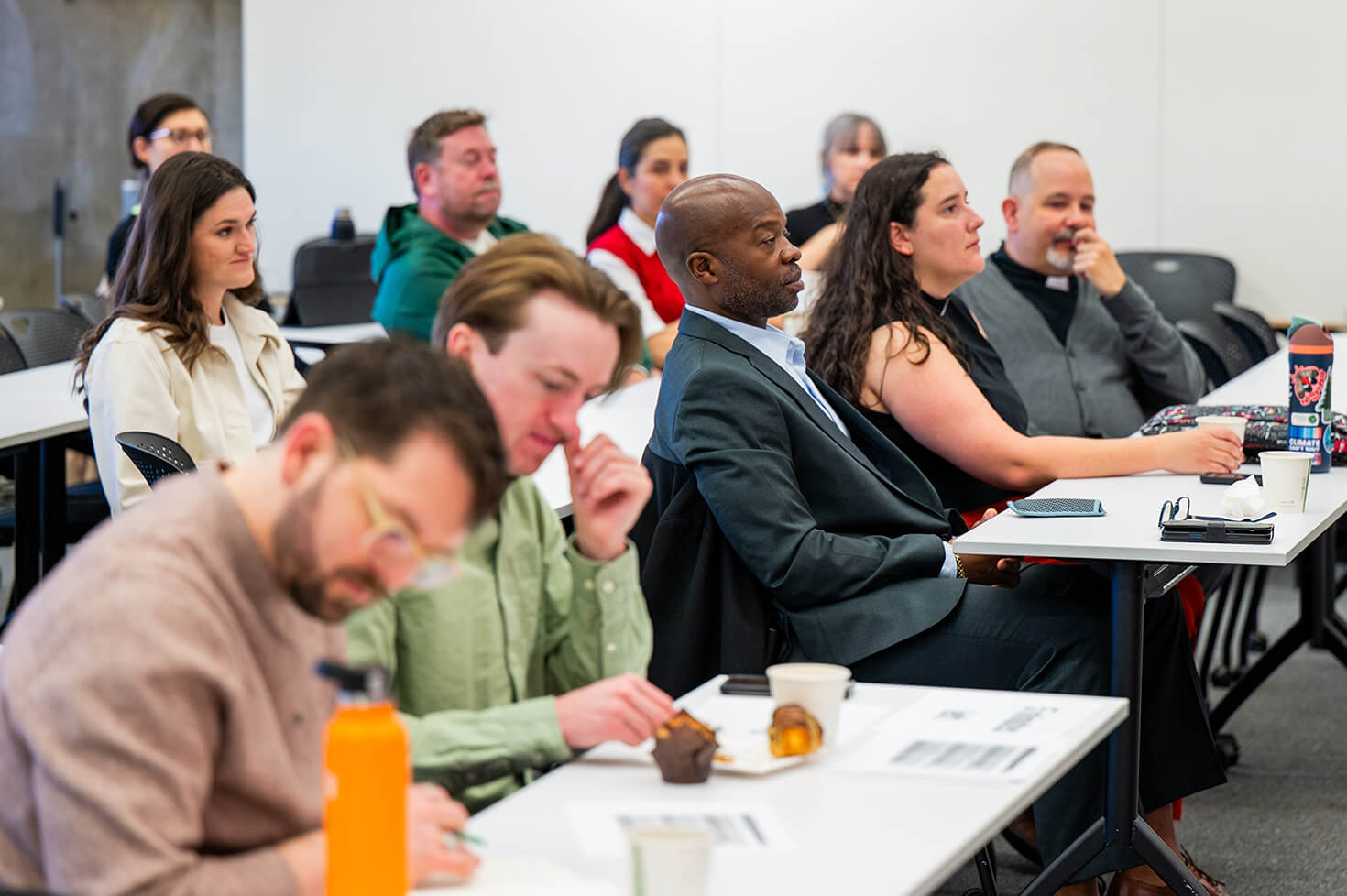
Panel 2 speakers in audience listening to other panel speakers.

Impact

Each panel highlighted the significance of bringing thinkers and practitioners of rural design and spiritual thought together. In our questions and conversations, the deep rhizomatic connections between places and across challenges reminded us of our shared goals.

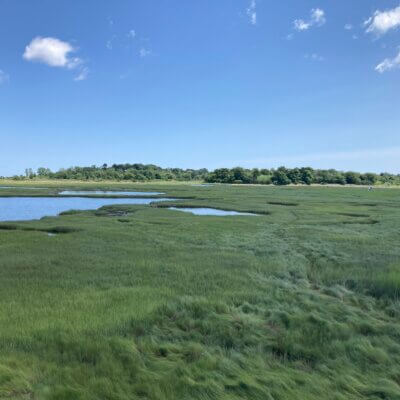
On Sunday, over 30 participants attended tours of Mount Auburn Cemetery, Belle Isle Marsh Reservation, and Middlesex Fells, green and natural spaces with unique spiritual histories and biodiverse environments.
Together, students and practitioners elevated rural areas as a unique object of focus for sustainable development and place-based inquiry involving complex spiritual histories, regional differences, and contested political landscapes. This initiative challenged architecture and landscape architecture students to examine their assumptions about where they might work, and it exemplified how to engage communities and unlock potential in underserved rural communities. By crystalizing spiritual practice and ownership within physical space and understanding the role of spiritual institutions and leaders as interventionists in the political-physical landscape, the conversations enriched Divinity School culture.

The symposium also opened a window for the Harvard community at large to better understand how sustainable development happens in rural communities. Collectively, the Garden Group and Rural GSD fostered connections with community leaders, organizers, planners, conservationists, culture-bearers, clergy, farmers, and artists. We hope these relationships will serve as touchpoints for further engagement with rural communities, whether in McDowell County, New Mexico, Massachusetts, or elsewhere.

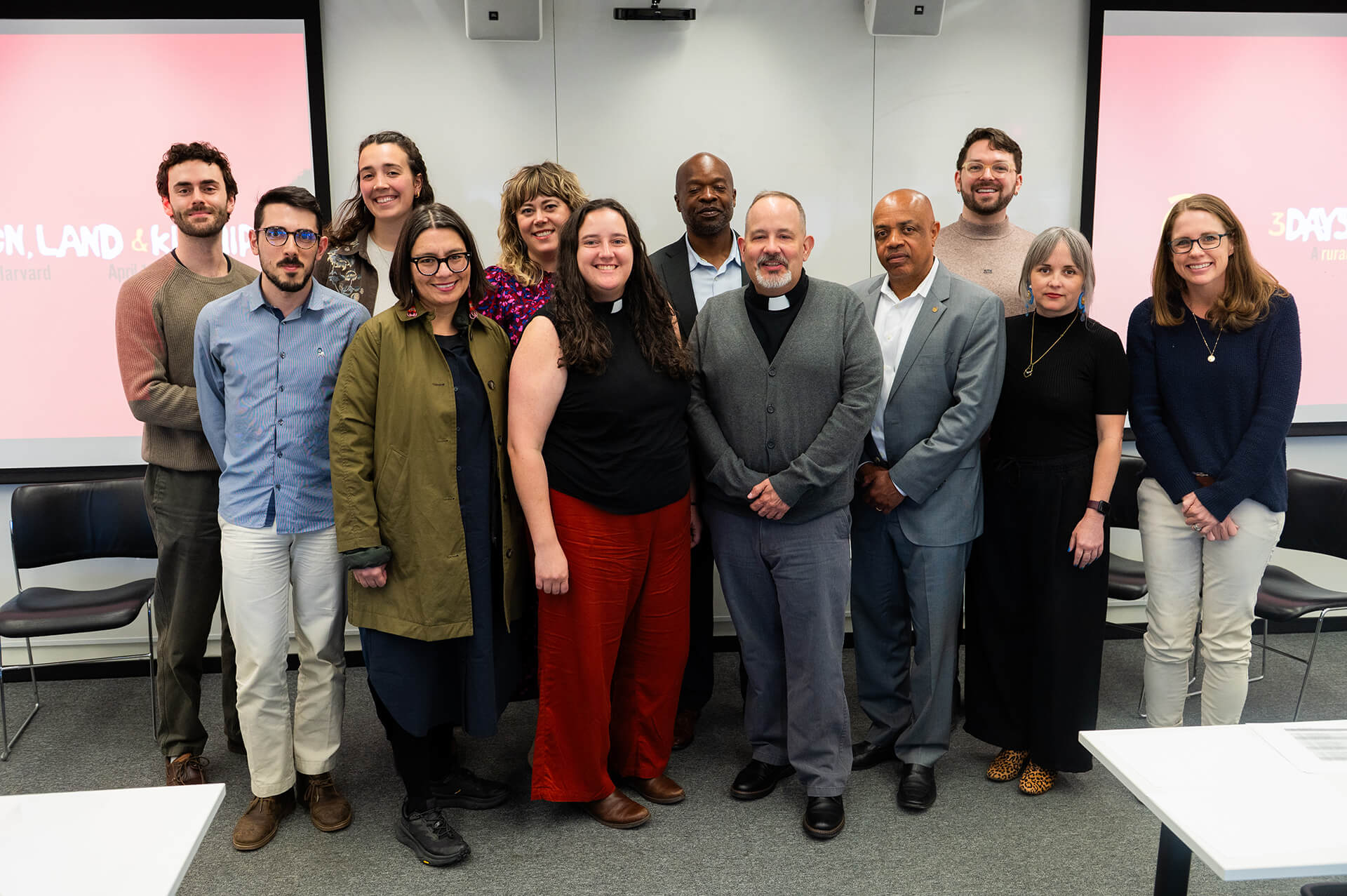
All speakers standing together

Natalia Rudiak’s career spans the fields of sustainability, community development, and public policy, with a focus on equity and inclusion. She was director of special projects at ReImagine Appalachia, where she advocated for federal climate investments and led regional planning for sustainable economic development across Appalachian Kentucky, Ohio, Pennsylvania, and West Virginia. She was a Loeb Fellow in 2025-26.

Grace Gallagher is a masters of divinity candidate ’27 at Harvard Divinity School. She focuses her studies on the human relationship to the land.

We are grateful to Anita Wai-Yee Kan for Friday exhibit photos and Sarah Bastille for Saturday panel photos. Featured image is courtesy of Whitney Plantation, and other images are courtesy of the presenters.