Arts and culture play a profound role in shaping our communities, yet they are often an afterthought in urban planning and policy praxis. We designed this course to address that gap, drawing from our careers at the National Endowment for the Arts and the cultural sector. We had three learning goals in mind:
 To expand understanding (and imagination) of the potential of arts, culture, and design to strengthen communities.
- To showcase publicly funded local and national projects as exemplars of arts partnering and advancing the work of other sectors, including public health, infrastructure, and environment.
- To exchange ideas on how to embed arts and culture in urban planning and policymaking.
It was a quick, broad survey, intended to pique students’ curiosity and inspire engagement with arts and culture over the course of their academic and professional careers.
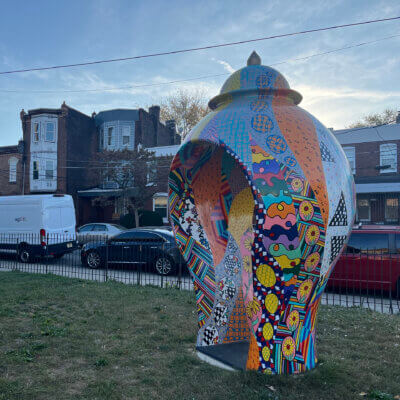
Image: We Here by Roberto Lugo, Philadelphia
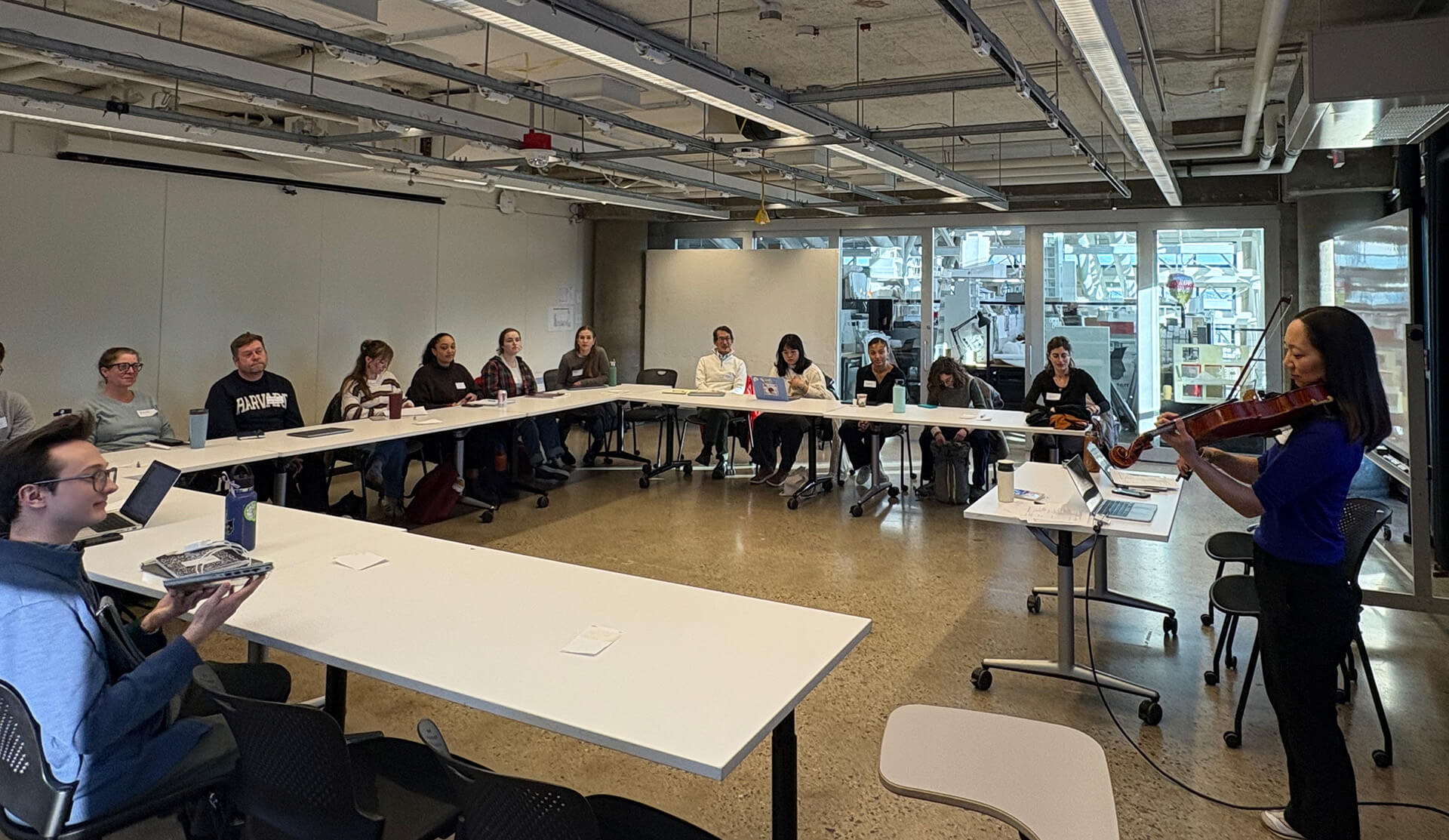
Our first day opened with a viola performance by Jenn Chang of the song “Jasmine Flower,” which, at different times in its 300 year history, has both served as a point of Chinese national pride and has been banned by the Chinese government. It raised a series of implicit questions: what stories can be told through a work of art? What role does place and context play in how work is interpreted? How can art bring communities together, or be used to divide them? What are the implications for how policymakers and planners intersect with arts and culture in service of strengthening communities?
During introductions, students revealed the remarkable range of their personal creative practices—knitting, photography, quilting, baking, painting, drama, music, and more. It reminded us that the arts are integrated into our everyday lives and encompass far more than what we experience in a museum or on the stage.
We explored frameworks to support this kind of daily arts integration, introducing the concept of “artful lives,” a term popularized by former NEA Chair Maria Rosario Jackson to capture how the arts contribute to multiple dimensions of our lives. In her words, “Arts process can be as important as, in some cases even more important than, art product.”
The galvanizing act of making art, staging a performance, or creating a piece of public art can be transformative for participants and the place engaged in the creative process. Conceptually, “artful lives” equipped us with the ability to perceive and understand the many ways that artists and cultural institutions contribute to a place.
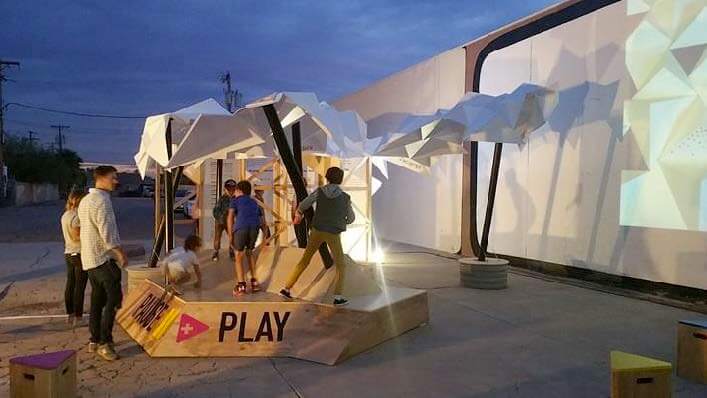
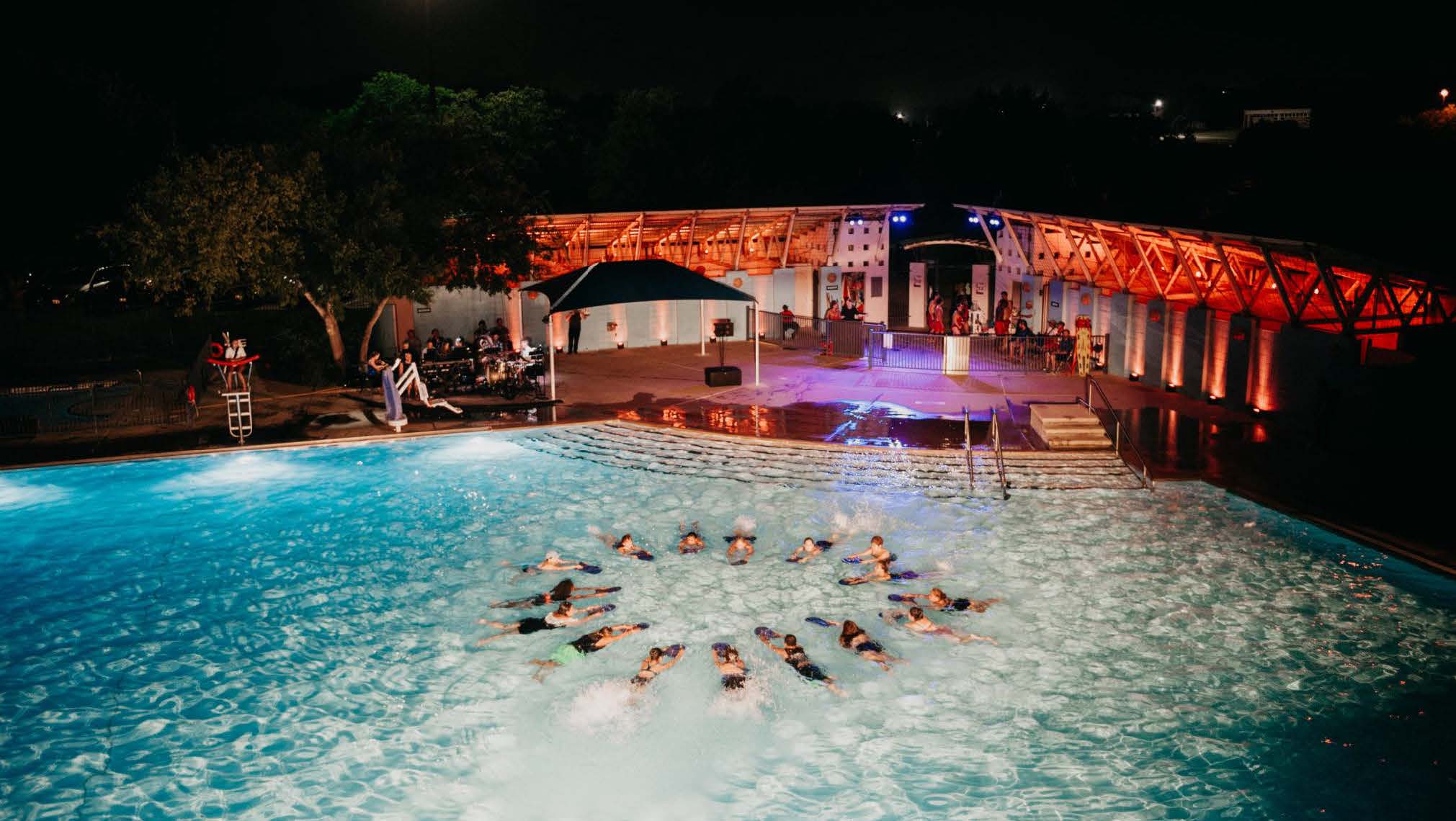
A review of 12 projects from the NEA’s nearly 700 Our Town creative placemaking grants showed how local coalitions consisting of artists, government, cultural institutions, civic organizations, and others worked together to positively impact a place with incredible, long term results. In the examples we looked at, artists and cultural institutions had a starring role in everything from building a more inclusive community-engaged planning process for public space, to driving regional tourism that invigorated a farming community via art installations, to building momentum for how a city stewarded and resourced its public pool system.
These Our Town projects helped pave the way for a more holistic policy strategy to embed the arts and creative approaches into federal agencies beyond the NEA. Our discussion of cross-sector federal initiatives included a 2021-22 partnership between the CDC and NEA, which demonstrated how artists offered creative approaches to achieve public health outcomes. We also examined the first-ever EPA artist in residence program, which employs artists to bolster governments’ community engagement capacity while enhancing the public’s understanding of environmental issues. This program demonstrated how pilot initiatives can drive broader policy change within a federal agency, in this case EPA rewriting funding guidance to allow funding of artists.
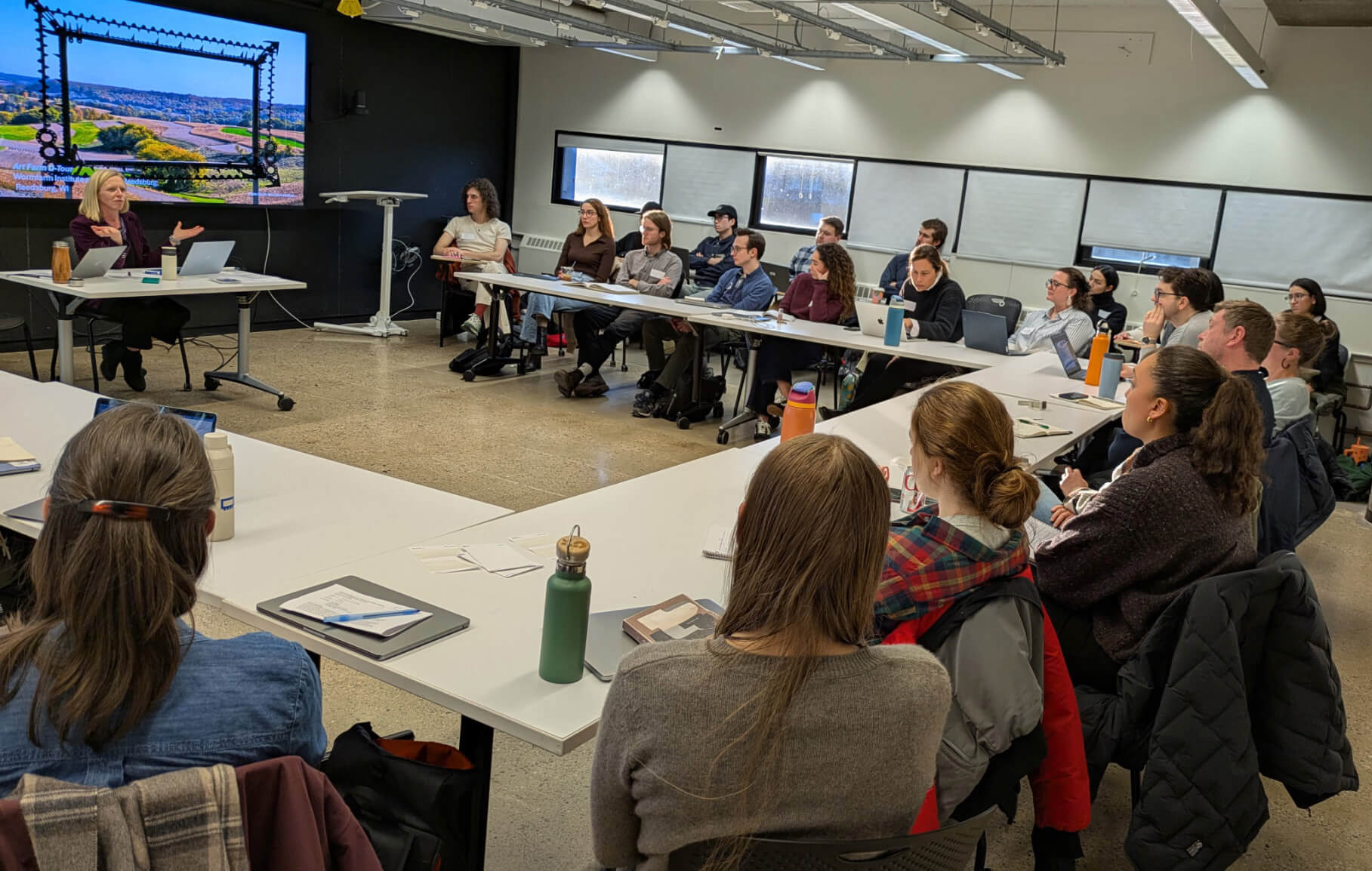
After the first class, students’ written reflections helped direct the material presented on day two. Students were particularly curious about effective communication of impact: if we all understand the value of the arts in our communities, how do we get others—policymakers, funders, colleagues, the public— on board?
We began class 2 discussing quantitative and qualitative ways to measure and evaluate the impact of arts and cultural projects. We explored a theory of change that guided NEA’s Our Town grant program. We also examined sector-specific resources, like ArtPlace America’s field scans and the Scenic Route, which demonstrate how the arts and culture contribute to particular policy goal areas in sectors ranging from health to housing to transportation.
Students also wondered how planners and policymakers might strengthen thriving arts ecosystems. To start answering this question, we looked at several local planning approaches, from cultural zoning overlays to percent-for-art ordinances, that support artists and cultural institutions. One example is Metropolitan Area Planning Council’s 2017 Arts and Planning Toolkit, which continues to support the 101 cities and towns of metro Boston.
To close out day two, participants offered reflections on what they learned and what questions they would carry with them. With so much in flux at the federal level, they posed questions about how state and local governments might continue to advance this important cross-sector work. They also wondered what it might take to reimagine and rebuild federal cultural agencies, a question that resonates deeply—and remains unanswered—in the cultural sector.
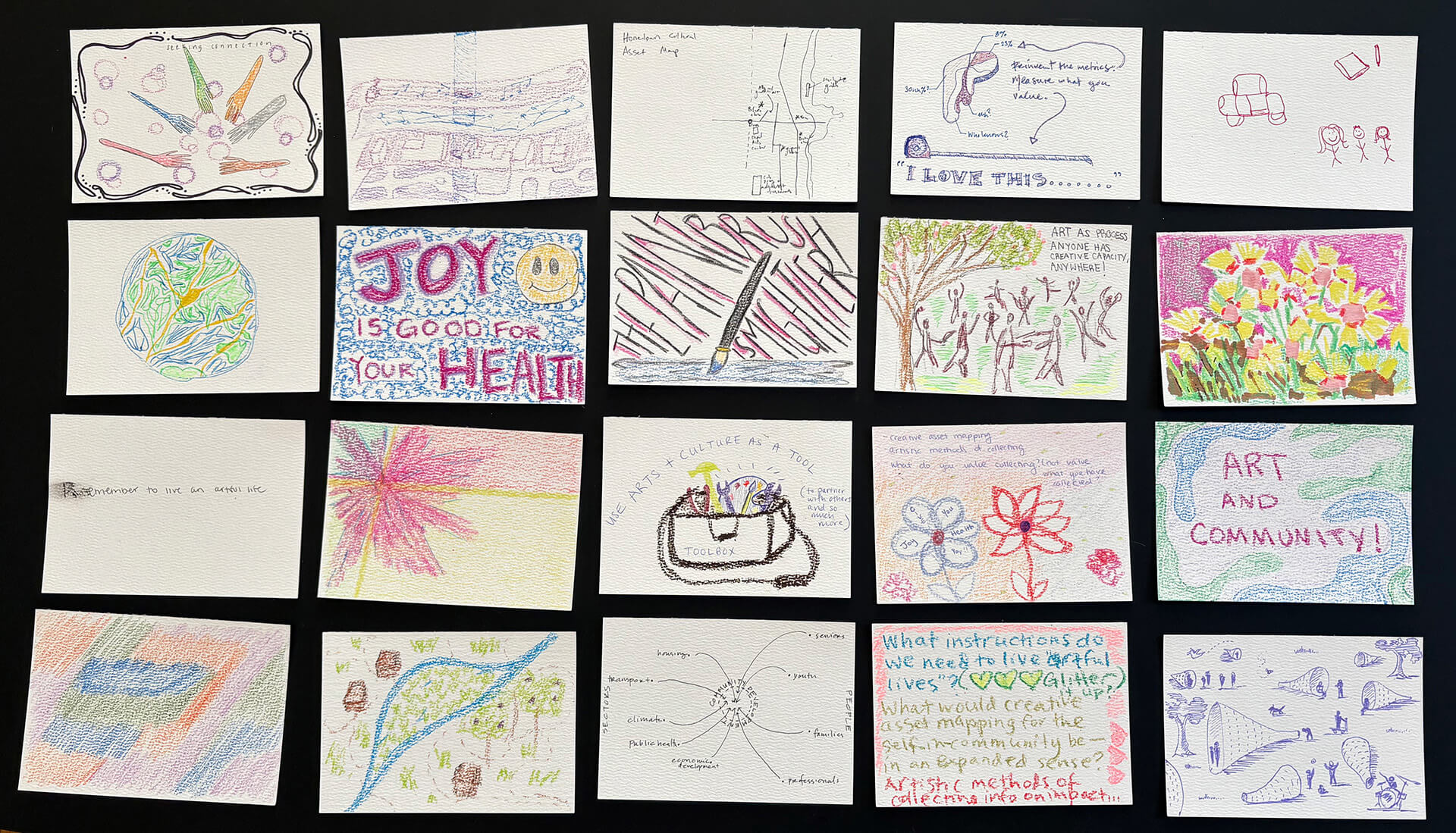
We ended as we began: with joyful artmaking, this time with the entire class participating. With blank postcards and colored pencils, we sketched images and wrote notes to our future selves, recentering our work on words like love, community, art, joy, connection. We left the room with a hope (and a few seeds planted)—that future leaders shaping our communities might better understand the ways in which artists and cultural institutions can be engaged to build more inclusive, equitable, healthy places.